

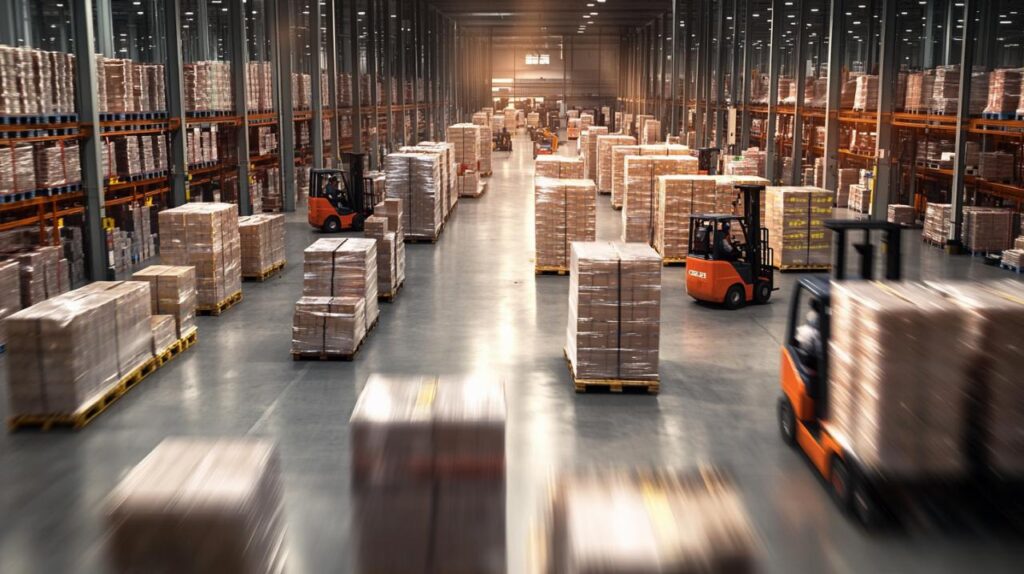
In an era where environmental responsibility has become as integral to business success as financial performance, supply chain managers are increasingly tasked with balancing operational efficiency alongside meaningful sustainability goals. The logistics sector, particularly pallet management, stands at a crucial intersection where practical decision-making can yield substantial environmental benefits without compromising profitability. By examining five essential figures, professionals can gain actionable insights into how modern pallet systems contribute to greener operations whilst supporting the bottom line.
Understanding carbon footprint reduction through modern pallet systems
The environmental credentials of contemporary logistics operations hinge significantly upon the choices made regarding material handling equipment. Pallets, often overlooked despite their ubiquity, represent a vital opportunity for emissions reduction across distribution networks. Companies that examine their supply chains closely discover that these contributions account for an overwhelming proportion of their total greenhouse gas emissions, frequently exceeding four-fifths of their environmental footprint. This reality underscores the importance of scrutinising every component of the logistics infrastructure, from warehousing practices to the selection of handling equipment.
Quantifying emissions savings in contemporary warehousing operations
Modern warehousing operations benefit from advanced pallet solutions that significantly curtail carbon output compared to traditional alternatives. Pooling solutions, whereby businesses share access to standardised pallets rather than purchasing them outright, have demonstrated measurable reductions in emissions by optimising utilisation rates and minimising empty return journeys. Such collaborative approaches ensure that fewer resources are expended on manufacturing new units whilst simultaneously reducing transport-related emissions through improved load planning. For managers seeking to document progress towards environmental targets, quantifying these savings provides tangible evidence of sustainability achievements that resonate with both stakeholders and consumers.
The Role of Sustainable Materials in Minimising Environmental Impact
Material selection forms another cornerstone of environmentally conscious pallet management. Wooden pallets, when sourced from responsibly managed forests, offer renewable and biodegradable options that align with circular economy principles. Conversely, plastic pallets present advantages in terms of durability and hygiene, particularly within sectors such as food and beverage or healthcare where stringent cleanliness standards apply. The choice between these materials should reflect not only immediate operational requirements but also longer-term environmental considerations, including recyclability and end-of-life disposal pathways. Increasingly, ethical materials have become a baseline expectation driven by both regulatory frameworks and consumer preferences, with packaging design now required to facilitate recycling and cost management under emerging regulations within the European Union.
Cost-efficiency metrics that drive both profitability and green initiatives
Sustainability and financial performance need not exist in opposition. Indeed, the most successful supply chain strategies recognise that environmental initiatives often unlock cost savings through enhanced efficiency and waste reduction. Businesses that have adjusted their packaging sizes to better fit individual orders have realised shipping cost reductions approaching a third of previous expenditures. This principle extends naturally to pallet management, where appropriately sized and well-maintained handling equipment reduces damage, optimises freight capacity, and lowers overall logistics expenses.

Calculating Return on Investment for Eco-Friendly Pallet Solutions
Investment in sustainable pallet systems yields returns that manifest across multiple dimensions. Rental services and pallet banking arrangements eliminate the capital expenditure associated with purchasing large fleets of pallets whilst transferring maintenance responsibilities to specialist providers. These models also reduce storage requirements for idle equipment, freeing valuable warehouse space for revenue-generating activities. Financial analysis should account for avoided costs related to equipment damage, replacement, and disposal, alongside the reputational benefits that accrue from demonstrable environmental commitments. Companies with strong environmental, social, and governance ratings consistently enjoy lower costs of debt and equity, whilst outperforming broader market indices in the overwhelming majority of cases.
Operational savings through enhanced durability and lifecycle management
Durability represents a key differentiator when evaluating pallet options from both financial and environmental perspectives. High-quality plastic pallets, for instance, can withstand thousands of trips over multi-year lifespans, whereas lower-grade alternatives require frequent replacement. Repair and maintenance services extend the useful life of handling equipment, preventing premature disposal and reducing demand for raw materials. Pooling solutions further enhance lifecycle management by ensuring that pallets remain in active circulation rather than languishing unused in storage. These approaches align operational efficiency with sustainability objectives, demonstrating that prudent resource management serves both environmental and economic interests.
Critical performance indicators for optimising supply chain sustainability
Effective management of environmental performance requires robust measurement frameworks that track progress against defined objectives. Supply chain managers must identify key performance indicators that capture both resource utilisation and environmental impact, enabling informed decision-making and continuous improvement. Visibility across distribution networks has become essential, with technology such as RFID systems providing real-time data on asset location and condition, thereby supporting more efficient operations and reduced waste.
Measuring resource utilisation and waste reduction across distribution networks
Resource utilisation metrics provide insight into how effectively pallets and other logistics assets are deployed throughout supply chains. Load optimisation rates, trip frequency, and pooling efficiency all contribute to understanding whether handling equipment is being used to its full potential. Waste reduction initiatives, meanwhile, focus on minimising losses at every stage, from damaged pallets requiring disposal to inefficient transport routes generating unnecessary emissions. Tracking these indicators reveals opportunities for improvement whilst demonstrating progress towards sustainability targets. Consumer attitudes increasingly favour environmentally responsible brands, with a significant proportion of shoppers willing to pay premium prices for products that reflect sustainable values.
Tracking circular economy contributions within logistics frameworks
The circular economy model emphasises keeping materials in use for as long as possible, extracting maximum value before eventual recovery and regeneration. Within logistics, this translates to pallet management strategies that prioritise repair over replacement, facilitate component reuse, and ensure responsible end-of-life recycling. Pallet collars and plastic boxes designed for repeated use exemplify this approach, offering modular solutions that adapt to varying load requirements whilst minimising waste. Measuring circular economy contributions involves tracking metrics such as repair rates, recycling volumes, and the proportion of operations supported by pooling arrangements. These indicators not only reflect environmental stewardship but also signal operational sophistication and long-term thinking. As regulatory frameworks evolve to demand better design for recyclability and cost management, particularly within the European Union, businesses that embed circular principles into their logistics operations position themselves advantageously for future compliance and competitive differentiation.