

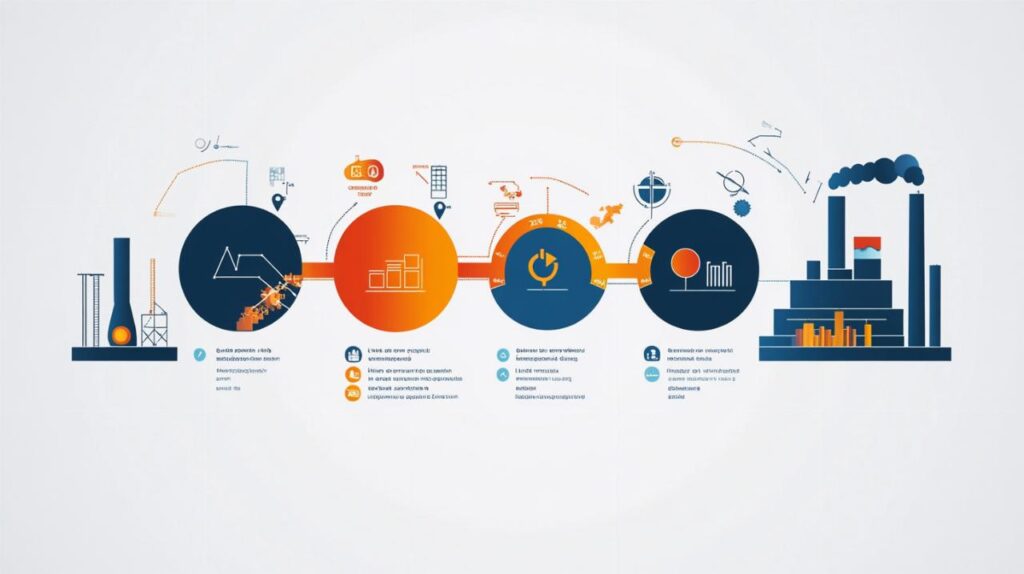
Every product that reaches the marketplace follows a predictable journey, moving through distinct phases that shape its commercial success and strategic direction. Business managers who grasp this progression gain a powerful advantage, enabling them to anticipate challenges, allocate resources wisely, and adapt their strategies to maintain competitive edge. This framework, known as the product life cycle, offers a roadmap for understanding how offerings evolve from initial conception through to eventual withdrawal, providing crucial insights for decision-makers across industries ranging from automotive to healthcare and technology.
Understanding the product life cycle framework
What is the Product Life Cycle and Why Does it Matter?
The product life cycle represents a comprehensive model that maps the journey of a product from its earliest conceptual stages through to its final decline in the marketplace. This framework comprises five distinct stages: development, introduction, growth, maturity, and decline. Each phase presents unique characteristics, challenges, and opportunities that require tailored approaches from management teams. The significance of this model lies in its ability to provide business leaders with a structured lens through which they can anticipate market dynamics, adjust promotional strategies, and make informed decisions about resource allocation. Companies that recognise which stage their products occupy can better align their marketing efforts, pricing strategies, and innovation initiatives to maximise returns whilst minimising unnecessary expenditure.
The Strategic Value of Life Cycle Management for Business Leaders
Mastering product life cycle management delivers tangible benefits that extend far beyond theoretical understanding. Organisations that implement life cycle strategies effectively experience shorter time to market, higher product quality, and reduced operational costs. These advantages stem from the ability to anticipate customer needs at each stage and respond with appropriate interventions. Furthermore, understanding life cycle dynamics enables managers to identify when products require reinvigoration, when to harvest profits from mature offerings, and when to divest from declining items. This strategic awareness helps prevent common pitfalls such as excess inventory, diminished profits, and product failure. External factors including competition, technological advancements, market acceptance, and economic forces all influence how products progress through their life cycles, making it essential for managers to combine life cycle awareness with ongoing market research and competitive intelligence.
The Development and Introduction Phases: Laying the Foundation
Conducting market research and developing your product concept
The development stage represents the foundation upon which successful products are built, occurring before any public launch takes place. During this critical phase, companies engage in extensive research and development activities, refining concepts and conducting rigorous testing to ensure viability. Initial costs during development tend to be substantial, as organisations invest in prototyping, market research, and iterative improvements. This stage demands careful attention to customer feedback mechanisms, including surveys and focus groups, which provide invaluable insights into potential market reception. Companies serving sectors such as automotive, aerospace, and electronics typically dedicate significant resources to development, employing advanced manufacturing processes including CNC machining, laser cutting, and metal fabrication to create prototypes that meet exacting standards. The emphasis during development centres on risk reduction, ensuring that products entering the introduction phase possess the quality and functionality necessary to capture market interest.
Launching your product: marketing strategies for market entry
The introduction stage marks the critical moment when a product makes its debut in the marketplace, transitioning from concept to commercial reality. This phase requires substantial promotional investment, as companies work to generate awareness among potential customers who may be unfamiliar with the offering. Marketing efforts during introduction focus heavily on customer engagement, employing strategies that highlight unique benefits and differentiate the product from existing alternatives. Promotional costs during this stage typically reach their peak, as organisations utilise advertising, public relations, and direct marketing to gain market attention. Sales during introduction often remain modest whilst the product builds recognition, and profitability may remain elusive as revenue struggles to offset the combined costs of development and marketing. Successful introduction strategies incorporate multiple channels, from traditional media to digital platforms, ensuring comprehensive market penetration. Companies also benefit from establishing robust customer feedback systems early, enabling them to gather satisfaction data and make necessary adjustments before progressing to subsequent stages.
Growth and maturity stages: maximising market potential
Capitalising on Growth: Increasing Sales and Building Brand Awareness
The growth stage represents a period of expanding demand and increasing profitability, as products gain traction among consumers who recognise their value proposition. During this phase, sales begin to rise substantially, and companies typically witness their first significant profits as economies of scale reduce unit costs and market acceptance accelerates. This stage requires strategic focus on establishing brand presence and expanding distribution channels to reach broader audiences. Companies often refine their marketing messages during growth, shifting from pure awareness campaigns to messages that emphasise benefits and competitive advantages. The growth phase presents an opportune moment for organisations to reinvest profits into capacity expansion, quality improvements, and customer engagement initiatives. Products such as electric vehicles currently exemplify this stage, experiencing rapid adoption as infrastructure develops and consumer awareness increases. Maintaining momentum during growth demands ongoing attention to product quality, responsive customer service, and competitive positioning to ensure that initial success translates into sustained market leadership.
Navigating Market Saturation and Heightened Competition at Maturity
The maturity stage arrives when market saturation occurs, characterised by steady sales volumes and intensified competition as multiple providers vie for market share. This phase typically represents the longest period in the product life cycle, during which companies must focus on differentiation and continuous improvement to maintain their position. Sales reach their peak during maturity, yet growth rates stabilise as most potential customers have already made purchase decisions. Profit margins may face pressure as competitors engage in price competition and promotional activities to capture remaining market opportunities. Successful navigation of maturity requires strategic emphasis on product enhancements, customer retention, and operational efficiency. Companies often introduce incremental innovations, update features, or develop premium variants to extend the maturity phase and delay decline. Smartphones exemplify products in the maturity stage, where manufacturers continually introduce refinements to sustain consumer interest despite widespread market penetration. Effective maturity strategies also incorporate inventory management practices that balance supply with stabilising demand, preventing overproduction whilst ensuring product availability. Business intelligence tools and customer satisfaction metrics, including net promoter scores, become particularly valuable during this stage, providing insights that guide strategic adjustments and help organisations identify emerging decline signals before they significantly impact profitability.