

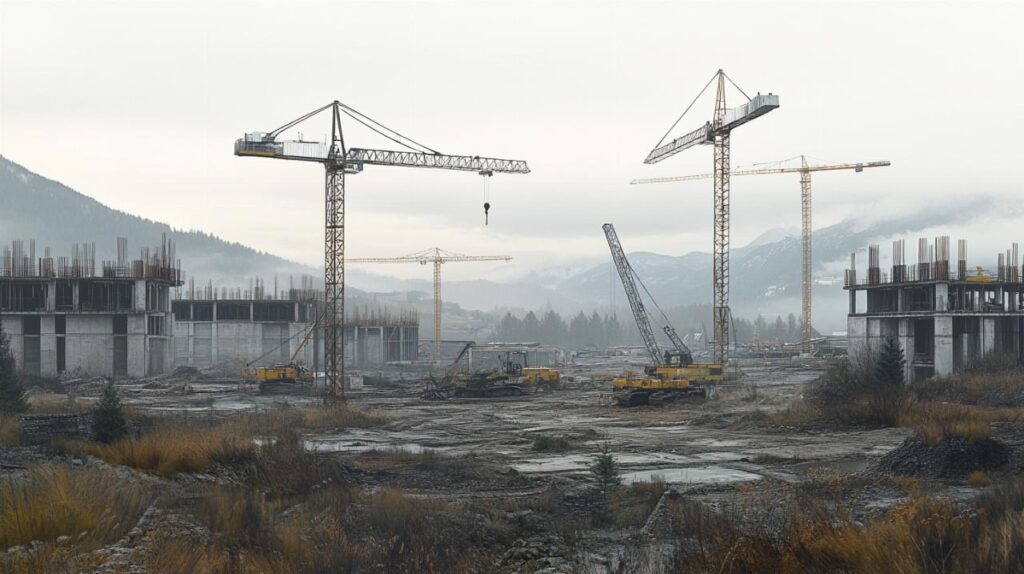
Across the dramatic valleys and plateaus surrounding Grenoble, a shadow has fallen over the building trade. What was once a thriving sector, underpinned by decades of urban expansion and tourism infrastructure, now finds itself grappling with a confluence of economic headwinds. From the bustling heart of the city to the high-altitude ski stations dotting the Isère landscape, construction firms are confronting a downturn that threatens not only order books and profit margins but also the very fabric of employment and future tourism growth in the region. The interplay between global forces and local realities has created a precarious moment for an industry that has long been integral to the character and prosperity of the French Alps.
Economic Headwinds Battering the Building Trade Across the Alps
Shrinking Order Books and Mounting Pressures on Local Firms
The construction sector in Isère has been buffeted by a series of challenges that have compounded over recent months. Rising interest rates, triggered by central bank efforts to tame inflation, have made borrowing more expensive for developers and private clients alike. This financial squeeze has cooled demand for new housing and commercial projects, leaving many firms with order books that have thinned considerably. The ripple effects of the conflict in Ukraine have further exacerbated the situation, driving up costs for raw materials such as steel, timber, and energy. These escalating expenses have placed additional strain on companies already operating on tight margins, forcing some to delay projects or, in the worst cases, shelve them altogether.
Local businesses, many of which are small and medium-sized enterprises, have borne the brunt of these pressures. For firms that rely on a steady stream of public works contracts and private commissions, the slowdown has been particularly acute. The volatility in supply chains and the unpredictability of material costs have made it difficult to price projects accurately, eroding confidence among clients and investors. In a region where the construction industry has historically been a bedrock of economic stability, this sudden fragility has sent alarm bells ringing among industry leaders and policymakers alike.
The Ripple Effect: From Grenoble to Savoy and Beyond
The crisis in Isère is not occurring in isolation. Neighbouring departments such as Savoy and the Rhône, as well as the broader Auvergne Alps region, are experiencing similar disruptions. The interconnected nature of the construction sector means that a slowdown in one area can quickly cascade into others. Suppliers, subcontractors, and logistics providers that serve multiple territories have all felt the pinch as activity contracts. In Grenoble, a city that has long positioned itself as a mountain metropolis with ambitions of integrating its urban fabric with the surrounding peaks, the implications are particularly stark. The vision of a city that harnesses its mountainous environment for both economic and cultural capital depends heavily on continued infrastructure development and investment in tourism facilities.
Historically, Grenoble has leveraged its mountain setting to fuel growth. The International Exhibition of Hydropower and Tourism in 1925 showcased the city's early recognition of the economic potential nestled within its alpine geography. Decades later, the 1968 Winter Olympics cemented Grenoble's reputation as a hub for winter sports and mountain tourism. Yet today, as the construction sector falters, the ability to maintain and expand the infrastructure that supports this identity is under threat. The delicate balance between preserving natural spaces and promoting recreational use of the mountains is complicated by a lack of new investment and the deferred maintenance of existing facilities.
Jobs on the Line: What the Downturn Means for Workers in Isère
Employment fears as companies scale back operations
The contraction in activity has inevitably raised concerns about job security for the thousands of workers employed in the building and public works sector across Isère. As firms scale back operations, temporary layoffs and reductions in working hours have become more common. The uncertainty surrounding future contracts has also led some companies to freeze recruitment, depriving young people and those seeking career changes of opportunities in a sector that has traditionally offered stable, well-paid employment. The knock-on effects extend beyond construction sites themselves, affecting ancillary industries such as transport, equipment rental, and materials supply.
For many workers, the downturn represents a profound shift in fortunes. The construction trade has long been a pathway to economic security, particularly in regions where alternative employment opportunities are limited. The prospect of prolonged underemployment or job losses is therefore not merely an economic issue but a social one, with potential ramifications for communities across the department. The erosion of purchasing power among construction workers could further dampen local demand, creating a feedback loop that deepens the economic malaise.
Voices from the Ground: Insights from Capeb, Eric Piolle, and Industry Leaders
Industry representatives and local officials have been vocal in their assessments of the crisis. Organisations such as Capeb, which represents small and medium-sized construction businesses, have highlighted the urgent need for policy interventions to stabilise the sector. They argue that without targeted support, many firms risk insolvency, particularly those that lack the financial buffers to weather an extended period of reduced activity. There have been calls for measures such as temporary tax relief, streamlined planning processes, and increased public investment in infrastructure projects to provide a lifeline to struggling companies.
Political leaders, including Grenoble's mayor Eric Piolle, have acknowledged the gravity of the situation. Piolle and others have emphasised the importance of balancing economic imperatives with environmental considerations, particularly given the city's commitment to sustainable urban development. The challenge lies in finding ways to stimulate construction activity without compromising the region's ecological integrity or its long-term vision of integrating the mountains into the urban landscape in a responsible manner. Meanwhile, figures such as Bertrand Converso, Pierre Streiff, and Laurent Marmonier have contributed to the discourse, offering perspectives that reflect the diverse interests and concerns within the sector.
Looking Ahead: Can the Region's Tourism Sector Weather the Storm?
Infrastructure Delays and the Risk to Future Visitor Numbers
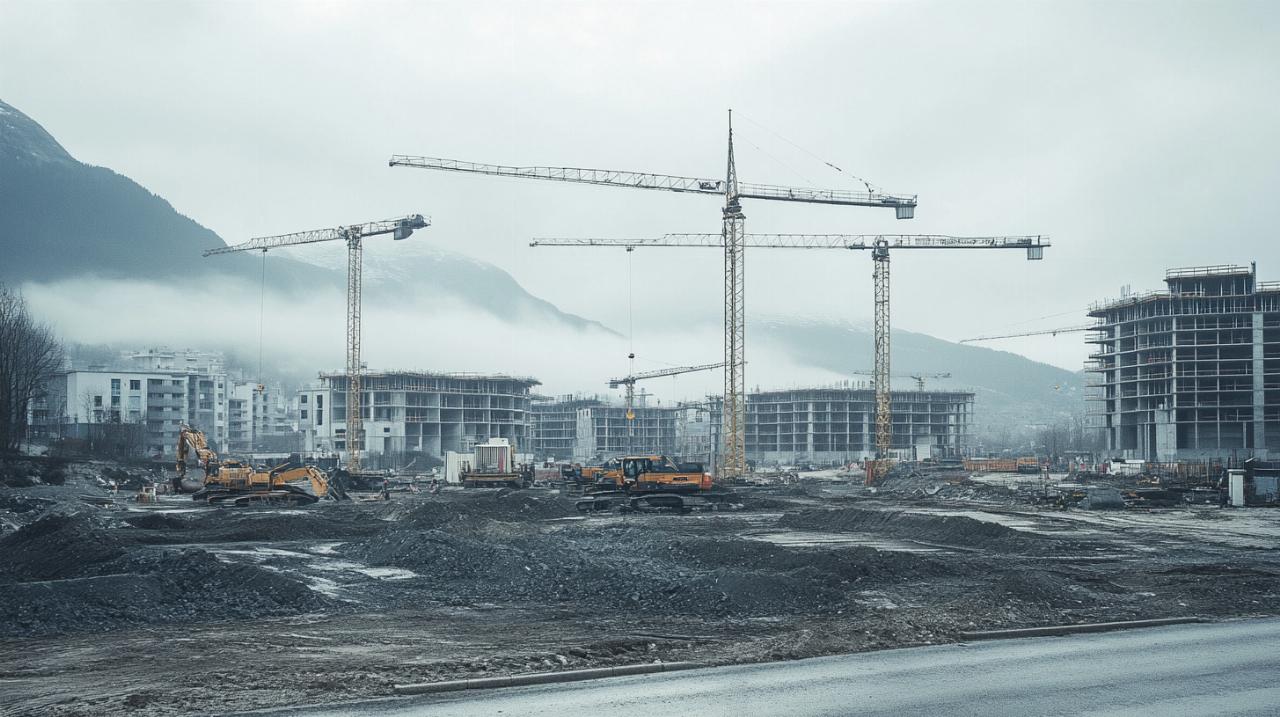
The construction crisis carries significant implications for the future of tourism in Isère. The region's appeal as a destination is inextricably linked to the quality and availability of its infrastructure. Delays in the construction or refurbishment of hotels, ski facilities, and transport links threaten to undermine the competitiveness of resorts at a time when they are already facing existential challenges. Climate change has placed enormous pressure on ski areas, with warming temperatures reducing snow cover and shortening the winter season. Resorts that once thrived on predictable snowfall are now confronting the reality that their business models may no longer be viable.
France remains one of the world's premier ski destinations, attracting roughly fifty million visits annually to its array of resorts. The industry supports a workforce of approximately one hundred and twenty thousand people. However, predictions from the French space agency suggest that around half of Europe's ski resorts could close by 2050, with almost all at risk by the end of the century. Over the past seventy years, more than two hundred ski areas have already shuttered, predominantly those situated below two thousand metres. The closure of the Alpe du Grand Serre resort exemplifies the challenges. The local council had spent around three point four million euros since 2017 just to keep the resort operational, only to see a proposed twenty million euro redevelopment plan collapse due to a funding shortfall.
For communities dependent on snow-based tourism, the stakes could not be higher. In places like Alpe du Grand Serre, skiing accounts for a substantial share of local income, with some farmers deriving seventy per cent of their revenue from the sector. The loss of a resort can render entire livelihoods unviable, leaving councils to grapple with inherited debts and running costs that far exceed their capacity to manage. The construction crisis compounds these difficulties by delaying or preventing the diversification projects that might allow these areas to transition towards alternative forms of tourism or economic activity.
Government Policies and External Shocks: Charting a Path Forward
Navigating the path forward will require a coordinated response from government, industry, and local communities. Policymakers must weigh the competing demands of economic stimulus, environmental sustainability, and social equity. Investment in infrastructure remains essential, but it must be directed towards projects that align with long-term strategic goals rather than short-term fixes. For ski resorts, this means facilitating diversification into year-round activities such as hiking, mountain biking, and cultural tourism, which can reduce dependence on snow and broaden the appeal of the region.
External shocks such as the conflict in Ukraine and fluctuations in global energy markets have underscored the vulnerability of the construction sector to forces beyond local control. While these challenges cannot be entirely mitigated, improving resilience through measures such as local sourcing of materials, investment in renewable energy, and support for workforce retraining can help cushion future shocks. The mountains of Isère have long been viewed through multiple lenses: as nature reserves to be preserved, as emblems of regional identity, and as attractions that draw visitors from around the world. Reconciling these perspectives in the face of economic and environmental uncertainty will define the region's trajectory in the years to come.
The Bastille, a rocky spur rising in perfect alignment with Grenoble's historical centre, serves as a potent symbol of this multifaceted relationship. It is at once a protected natural space, a monumental landmark, and a popular destination for tourists and residents. The challenge facing Isère is to ensure that the valleys, plateaus, and peaks that define its character are not merely backdrops to urban life but integral components of a sustainable and prosperous future. The construction crisis, though daunting, presents an opportunity to rethink priorities and chart a course that honours both the economic vitality and the environmental stewardship that the region's mountains demand.